
Aditi Bhattacharjee
Bedtime Story
In recollection, everything is ghost.
The village, the people, their neighbors.
The mango tree is ghost, the gooseberries falling
on the tinroofed house is ghost, the pond, the field,
that childhood. Ghost, the hunger that gnawed
diligently. What did you do for food? We fed
on our fear. Or fear fed on our hunger, she says.
What was severed went to live on the palm trees
by the pond—the ghost hand, the gone eye,
the phantom breast. Ghost, that journey across
the ghost river to refuge. And brother harkening
to hear ghost voices. And upon confirming turning the boat
around, to keep from becoming ghost too. Weren’t you afraid?
But we had already eaten our fear. And besides
wouldn’t I rather be a ghost in my ghost country?
***
This poem is meant to demonstrate what becomes of memory for survivors of war. Some say it is fickle, that it is imagining things, some say it is fact. This poem puts in practise that very premise, mythologizing real events. —Aditi Bhattacharjee
Pichuṭān
in this photo the light is clear
in this photo the light is invisible
in this photo my mother in a red kurta and green salwar, standing against the pink burst of a bougainvillea tree in full bloom
in this photo her hair touches her waist, which she lost after her second child was born, which she laments, which makes her scold me each time I get a haircut
in this photo she is skinny as once I was and as when she would ask me to stay that way
in this photo a wind, a wound, a war
in this photo a new wife, a conjuring
in this photo her life is ahead of her
in this photo her life is behind her
in this photo she still has her mother, the news of her cancer has not spread
in this photo she also has me, but she does not know it yet
in this photo she still has herself but does not believe so
in this photo what you see is not perhaps what she’d hoped
in this photo a silence that no one can crack open
in this photo her gone childhood, gone father, gone home
in this photo you can’t smell her fear
in this photo you can’t hear, the call of the fox that haunts her stories
in this photo myth, mirror, memory
in this photo all her words tight-lipped, well contained and composed
in this photo the balance sheet of loss and gain and starting over
in this photo, songs buried deep that don’t breach until 22 years after
in this photo you will not find the pigeons, ants and strays that turn up wherever she goes
in this photo ruselight, a void, a chimera
in this photo shifting borders and the terror of paperwork and passport
in this photo secrets and the hankering for a homeland
in this photo the origin
in this photo pichuṭān, the invisible thread that realigns my body towards the familiar, toward home, towards her
in this photo a woman, mother, magician, ghost
in this photo the makings of a poem that I write and write and write, never arriving at the turn
***
A person who survives a conflict zone has multitudes within them which they are unable to express. Silence becomes the primary language. This poem uses the anaphora as a haunting, you don’t see the photograph but you are asked to imagine the unimaginable. —Aditi Bhattacharjee
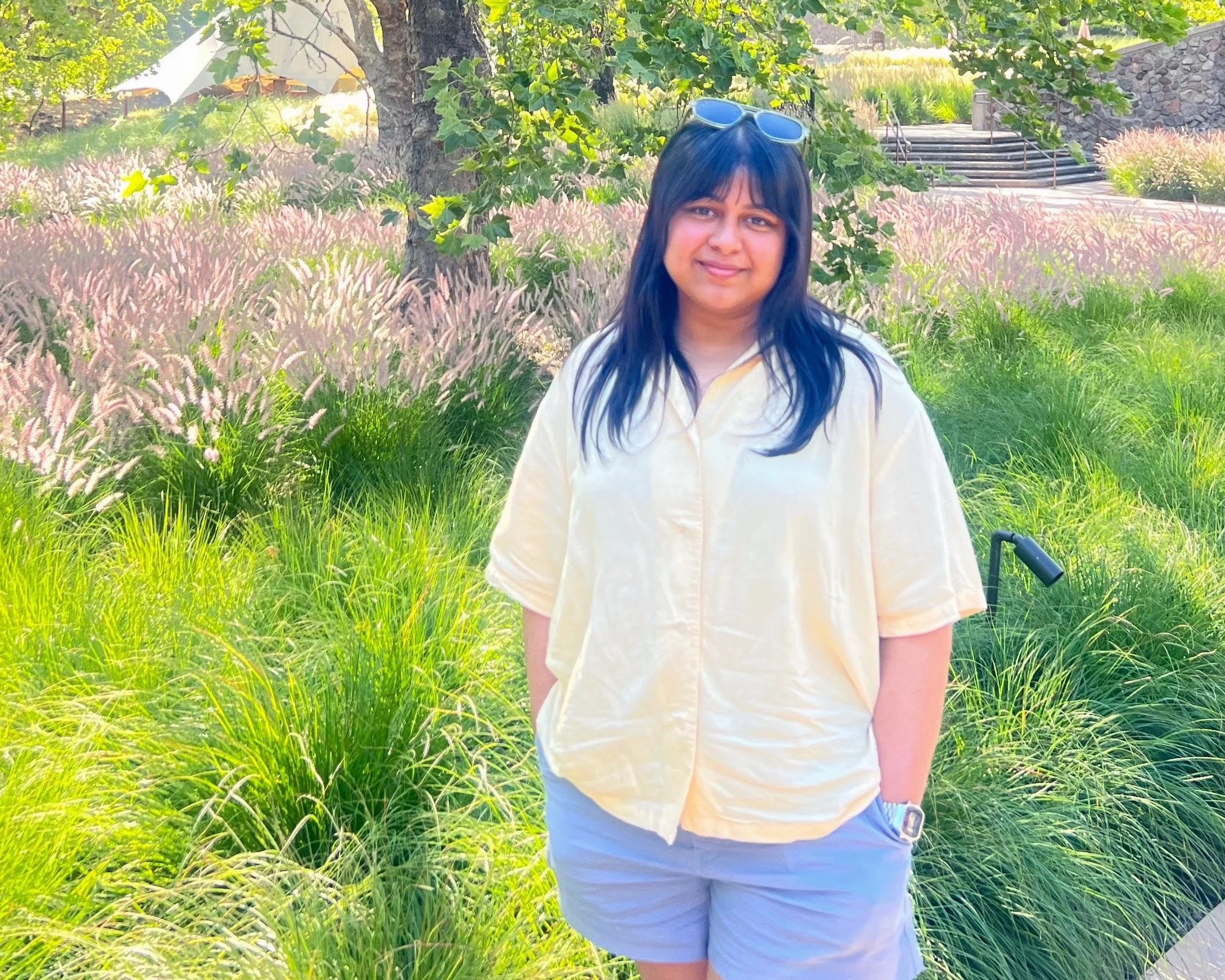
Aditi Bhattacharjee is an Indian writer and translator. Her debut poetry collection Daughterling (retitled Pichuṭān) was a finalist for the 2025 Orison Prize in Poetry. Her work has appeared in Gone Lawn, Pinch, Epiphany, Los Angeles Review and elsewhere. She holds an MFA in creative writing from The New School, co-organizes the River Reading Series and lives in New York City.
